What are Himalayan salt tiles?
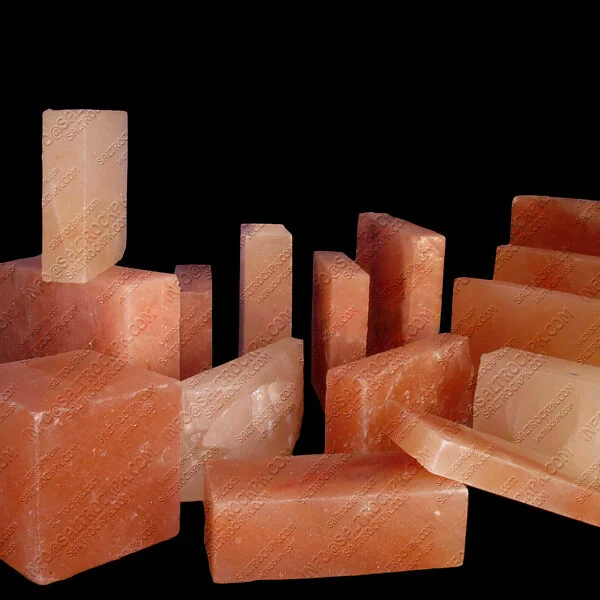
Himalayan salt tiles are cut from natural rock salt and shaped into blocks, bricks or panels for decorative and functional installations. Their colour can range from pale blush to deep orange-red, and every piece has its own mineral lines and natural pattern.
When lit from behind, the surface produces a warm, soft glow. This makes salt tiles popular for spaces that aim to feel calm, distinctive and connected to natural materials.
Where salt tiles are commonly used
Spas and wellness centres use salt tiles for reception features, relaxation rooms and treatment-area accents. Saunas may use them as decorative wall sections when the installation system is suitable for the environment. Restaurants, hotels, yoga studios, salons and private homes also use them for feature walls, counters and illuminated panels.
The best installations treat salt as a design material rather than a structural product. Tiles need a stable backing, controlled conditions and a plan for maintenance.
Lighting makes the biggest visual difference
Backlighting reveals the natural variation within each tile. Warm LED lighting usually complements the pink and amber tones, while even spacing helps prevent bright spots. Designers can use dimmable lights to shift the mood between daytime and evening settings.
A small test panel is useful before building a full wall. It allows the project team to approve the tile colour mix, joint spacing, light temperature and brightness.
Installation and environment
Salt naturally attracts moisture, so placement and ventilation matter. Installers should avoid direct water contact, uncontrolled humidity and outdoor exposure unless the system has been professionally designed for those conditions. The supporting frame, adhesive or mechanical fixing method should match the tile size and site environment.
Local building, electrical and fire rules still apply. A qualified contractor should review the wall assembly, lighting access and load requirements before installation.
Cleaning and care
Salt tile surfaces should be kept dry. Light dust can usually be removed with a soft, dry cloth or brush. Wet cleaning and harsh chemicals can damage or dissolve the surface. If a tile is placed in a humid area, routine inspection helps identify moisture marks or loose pieces early.
Spare matching tiles are useful for commercial projects because natural colour batches can vary over time.
What to confirm before ordering
Provide the required dimensions, thickness, edge style, colour preference, quantity and project destination. Ask how the tiles will be packed and protected against chipping during export. For illuminated walls, order samples from the intended production batch and review them under the planned lighting.
Red Top Trading supplies natural Himalayan salt tiles for commercial and design projects. Share your drawings or quantity requirements with our team for suitable sizing and export packing options.